
Implementation of a new billing system for a manufacturer of oncology products
Space for a lead paragraph describing the key context of the project and the value delivered by the implemented solution.
In this article, you will learn:
- how we met the manufacturer’s requirements regarding settlements in accordance with the reimbursement decision
- what challenges we faced at the outset and why the lack of a reliable data source was a key problem
- What principles did we adopt to ensure centralisation, segmentation and high data quality?
- how we designed and implemented the solution, including the data entry, validation and reporting modules
- What was the implementation timetable like, and which stages were the most important?
- what results we have achieved — including better control over data and more efficient accounting
In a nutshell
A brief overview of the project
Partner
a manufacturer of an innovative medicine covered by the medicines programme and Emergency Access to Drug Technologies (RDTL)
Scope
product application reporting, data validation, the e-Urtica portal, support for healthcare facilities, training and support for regional coordinators
Objective
monitoring the settlement of the risk-sharing instrument in accordance with the applicable reimbursement decision

Data
The project in figures
12
healthcare facilities covered by the reporting process
2
funding routes: the medicines programme and the RDTL
12 months
from enquiry to launch
2 years
functions of the solution
+122 k
records processed in the system
The manufacturer’s requirement
Settlements in accordance with the reimbursement decision
- The manufacturer of an innovative pharmaceutical product required a reliable process for monitoring the settlement of the risk-sharing arrangement in accordance with the applicable reimbursement decision.
- The product was eligible for reimbursement under the medicines programme and available through Emergency Access to Drug Technologies (RDTL). It was therefore essential to report every administration of the product and to clearly assign it to the correct funding pathway: either the medicines programme or RDTL.
- The lack of such a distinction made it difficult to analyse the market properly, to account for volumes, and to take operational and business decisions.
- Another key element of the process was the preparation, submission and processing of the questionnaires provided by the facilities. It was essential that these were completed correctly in order to facilitate access to treatment and to organise the treatment process in accordance with the applicable legal regulations.
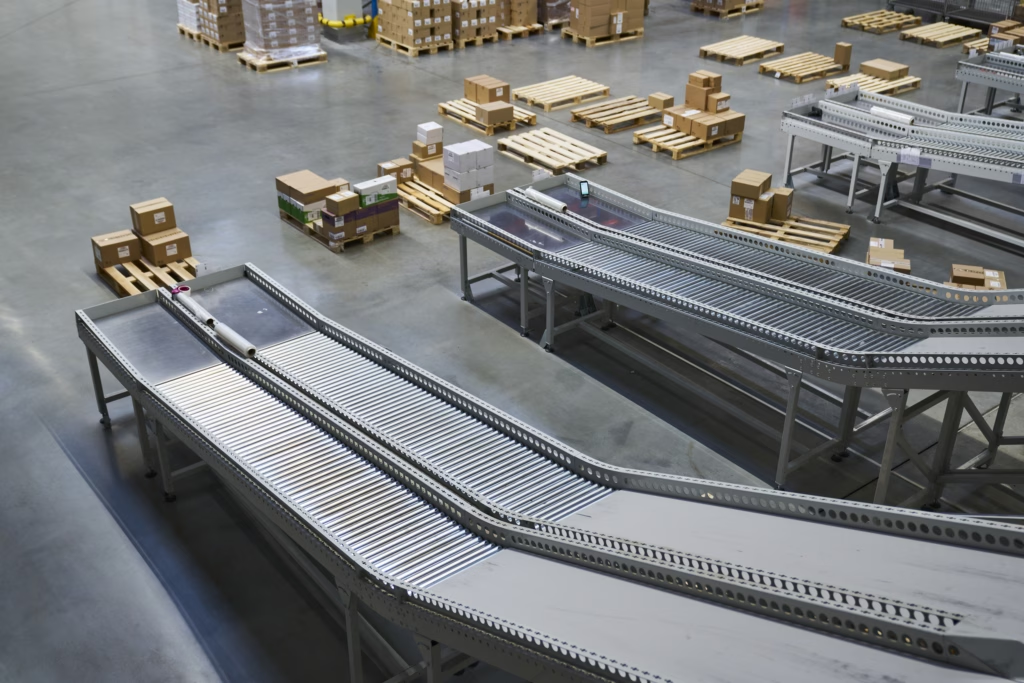
Initial state
The lack of an integrated and reliable data source
- Prior to the implementation of the solution, there was no single, integrated and reliable source of data on the use of a pharmaceutical product covered by the reimbursement scheme.
- The data was collected from a variety of sources and in various formats — ranging from online tools to paper-based reports.
- Manual data organisation increased the risk of errors, inconsistencies and accounting issues.
- The biggest challenge was to unambiguously assign each reported application to the correct funding stream.
Partner’s opinion
“We value our collaboration with Urtica for their professional approach, efficient communication and partnership-based relationship. The projects we carry out together are completed on time and in line with our expectations.”
 COMPANY NAME
Implementation guidelines
Centralisation, segmentation, flexibility and data reliability
System-level support for reporting
The intention was to create a centralised system that would aggregate data on product applications from selected key healthcare organisations participating in the project.
Data segmentation
It was essential to distinguish between and report each application precisely, broken down by funding route: the medicines programme or the RDTL. The lack of this information made it impossible to carry out a proper market analysis and to settle accounts.
Process flexibility
The system had to take into account the varying levels of digitalisation among healthcare providers. It was necessary to create a mechanism that would also accommodate facilities without permanent access to IT systems or those submitting reports in paper form.
Data integrity and reliability
There was a high risk of errors and inconsistencies arising from the manual collection of data from multiple sources. It was crucial not only to collect the data, but also to verify it before using it in reports and analyses.
Support for the organisations involved in the process
The solution had to include not only a digital tool, but also communication with hospitals and organisations involved in the reimbursement of the medicine, user training and ongoing support to ensure accurate reporting.
Solution
An integrated reporting workflow for data management and validation on the e-Urtica portal

Urtica has implemented a dedicated reporting workflow within the e-Urtica portal. The solution involved collecting data from healthcare facilities, digitising it, validating it and preparing reports for authorised users.
The process combined digital and organisational elements: a portal for healthcare facilities, an administrator’s dashboard, a validation mechanism, a reporting module, communication with hospitals, user training and support from regional coordinators.
Implementation
Dual-track data entry module 01
Portal for healthcare providers
A secure web interface has been made available via the e-Urtica portal. Authorised hospital staff can enter data on each administration of the product and immediately assign it to a medication programme or the RDTL.
Administrator panel
A dedicated module has been developed to enable the manual entry of data from physical reports, scans or paper documents. Data submitted outside the portal is digitised and incorporated into the central database.
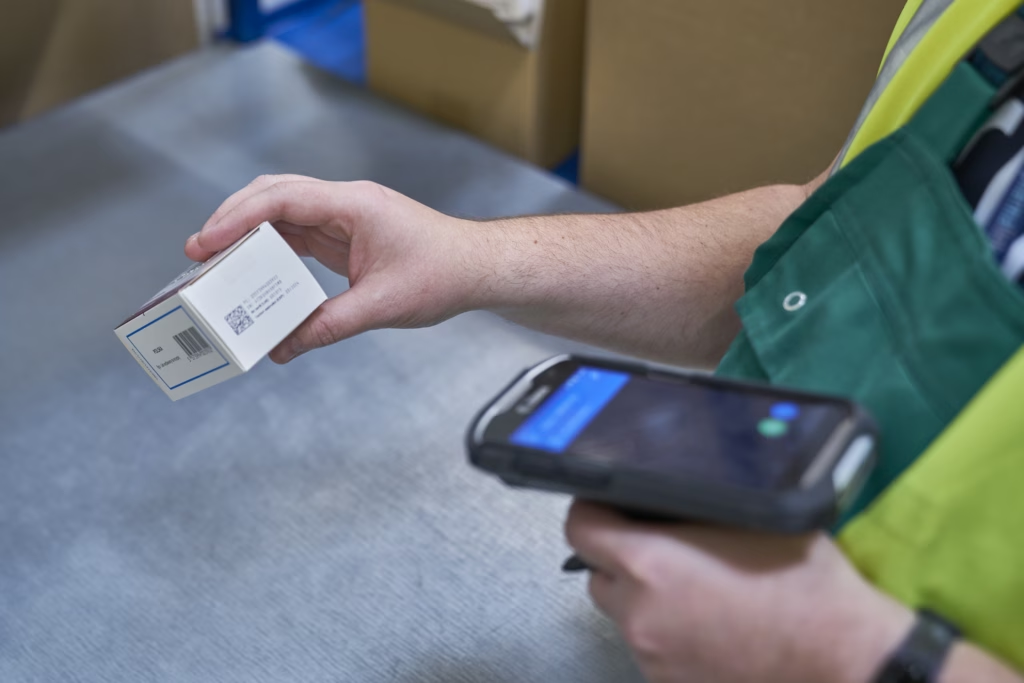
Advanced validation mechanism 02
- The system has been equipped with a data validation mechanism. The product quantities reported by the outlets are cross-checked against the transaction data.
- The system automatically flags up discrepancies that require clarification, enabling them to be identified quickly and minimising the risk of drawing incorrect business conclusions.
Dynamic reporting module 03
Generating reports broken down by medicinal product and RDTL
The data is presented in a structured format that allows for the analysis of both sales performance and the reported use of the product in outlets.
Reports updated once data has been entered into the system
By providing authorised users with up-to-date information without the need to manually consolidate data from multiple sources.
Access only to the data necessary for the performance of their duties
A role-based access control system ensures that each participant in the process has access only to the data they need.
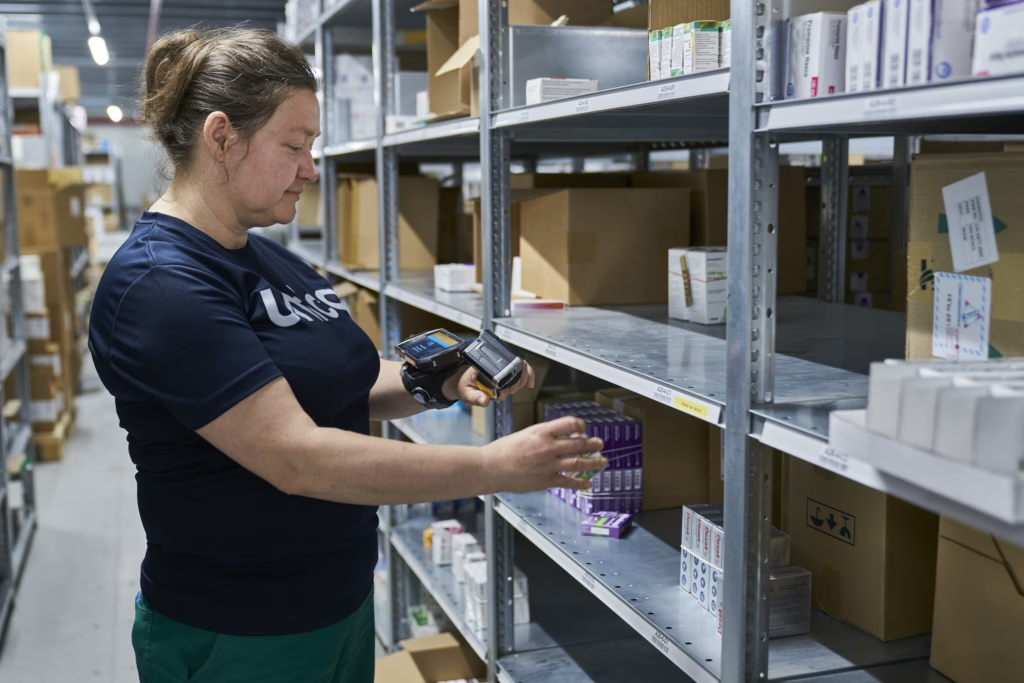
Communication and support for healthcare facilities 04
- Urtica liaised with hospitals and organisations involved in the reimbursement of the medicine — by email and telephone — to ensure that users received clear information on the reporting procedures.
- Each facility is supported by a regional coordinator, who maintains direct contact with hospital staff.
- Users have been trained in how to use the e-Urtica portal and in the rules for reporting and accounting for the product within the relevant funding stream.

01 04
Implementation timetable
Implementation timetable
02.2026
Enquiry to the manufacturer
03.2026
Analysis of reporting needs and requirements
04.2026
Development of a solution concept
05.2026
Configuring the report path in the e-Urtica portal
Users have been trained in how to use the e-Urtica portal and in the rules for reporting and accounting for the product under the relevant funding stream.
06.2026
Process testing and validation
07.2026
Preparing communications for healthcare facilities
08.2026
User training
09.2026
Start of production
12 months
from enquiry to launch
for the past 2 years
a working solution
12
establishments covered by the scheme
+12 000
platform users
Result
Control over data, more efficient accounting and better business decisions
Following implementation, the manufacturer gained a structured data source, a validation mechanism and real-time access to the reports needed to monitor settlements and plan business activities.
A reliable source of truth
A single, central data repository has been created, eliminating information chaos and ensuring consistent reporting across the organisation.
Detailed sales analysis
the ability to analyse sales performance and reported product usage, broken down by medicines programme and RDTL.
Automation and time-saving
The time and effort required to collect and process data have been significantly reduced, thereby minimising the risk of errors.
Transparency and oversight
The manufacturer has achieved greater transparency regarding the product’s journey and has been provided with tools to monitor the accuracy of settlements on an ongoing basis.
A basis for strategic planning
Reliable data has become the foundation for more accurate business decisions, demand forecasting and planning the development of relationships with healthcare providers.
More effective cooperation with institutions
Thanks to communication via email and telephone, as well as the support of regional coordinators, the centres were provided with a clear course of action.
Contact
Quality documentation and evidence
An introductory text explaining what this is all about… Lorem ipsum ed do eiusmod tempor incididunt ut labore et dolore magna aliqua. Ut enim ad minim veniam, quis nostrud exercitatio
Choose which materials you’d like to receive, leave your details, and we’ll get in touch and send them to you
*mandatory fields
Evidence and compliance
Evidence and compliance
01 Quality
Lorem ipsum dolor sit amet, consectetur adipiscing elit, sed do eiusmod tempor incididunt ut labore et dolore magna aliqua. Ut enim ad minim veniam, quis nostrud exercitation ullamco laboris. Lorem ipsum dolor sit amet, consectetur adipiscing elit, sed do eiusmod tempor.
02 Information security
Lorem ipsum dolor sit amet, consectetur adipiscing elit, sed do eiusmod tempor incididunt ut labore et dolore magna aliqua. Ut enim ad minim veniam.
- Quis et posuere orci donec non ac massa vulputate
- Quis et posuere orci donec non ac massa vulputate
- Quis et posuere orci donec non ac massa vulputate
- Quis et posuere orci donec non ac massa vulputate
Contact
Get in touch with us
*mandatory fields